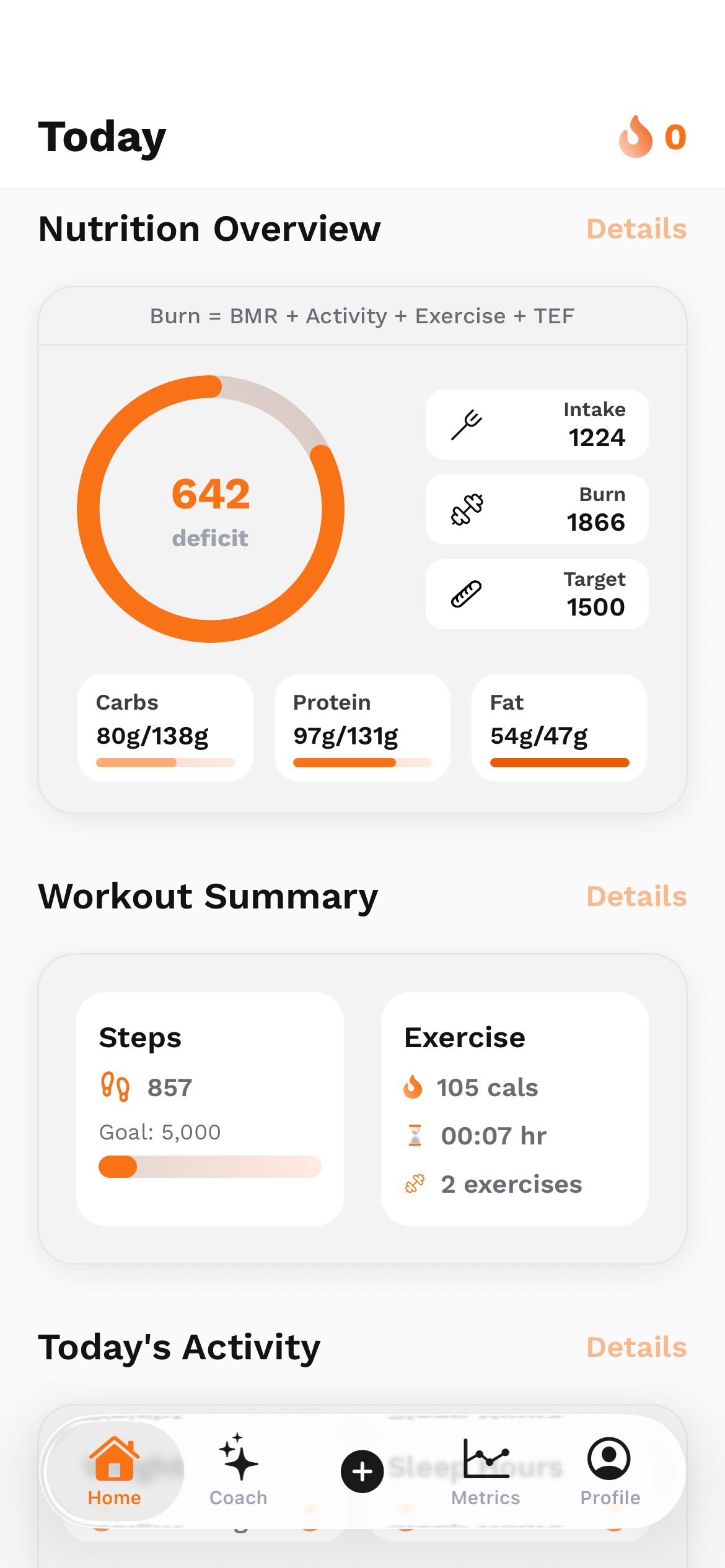
Before co-founding UltraFit360, I worried about the cost of getting an app off the ground. Servers, AI services and the things a product might need at scale were easy to imagine as one intimidating bill. Learning about startup programs changed that picture. Our app build is supported by credits from ElevenLabs, Microsoft Azure and Google Cloud. That gave me a more practical question to ask: what can we validate with the resources available today?
The bill in my head arrived before the product
A product idea can get expensive surprisingly early in your imagination. You picture the polished app, the full feature set, lots of users and the infrastructure to support them. Then you price that imagined future as though it all has to be purchased on day one. I had a version of that thought before UltraFit360.
The work becomes easier to reason about when I separate building the first useful experience from operating a mature platform. An early product needs a narrow problem, a usable flow and evidence that someone wants it. Its first infrastructure decisions should serve that stage. Spending as though scale has already arrived can make an idea feel impossible before it has been tested.
Startup credits helped me see that there are resources designed for this early stage. They can reduce eligible service bills while a team builds and learns. They still come with an application, a limited scope and an expiry date. The useful lesson for me was to research the available support before allowing an untested cost assumption to end the project.
What changed for our UltraFit360 build
ElevenLabs, Azure and Google Cloud credits are part of the support behind our app today. That is our experience, rather than a promise that another founder will receive the same offers. I am not publishing our account balances, grant documents, application identifiers or infrastructure configuration here.
What matters to the story is the change in how I approached the problem. Instead of treating every AI capability and backend service as an immediate cash expense, I could investigate which services had a relevant startup path and which product experiments they could support. The team still had to design, code, test and maintain the app.
I would encourage an early founder to make the same distinction. A grant can help with a service bill. It does not do customer research, resolve a confusing onboarding flow or prove that a feature is valuable. The best use of a temporary credit window is to learn something important about the product while the cost of that learning is lower.

Six startup programs worth checking
These are official program summaries checked on 1 November 2026. All amounts below are advertised maximums or entry offers, not guaranteed awards. Eligibility, service coverage, prior credits and regional availability can affect an application. The linked provider page is the place to confirm the current terms before applying.
Scroll the table horizontally to see all columns.
| Program | Published benefit | What to check before applying |
|---|---|---|
| ElevenLabs Grants | 12 months; 33 million characters advertised | Product with a monetization strategy, business email and fewer than 25 employees; agency and one-off-project exclusions. |
| Microsoft for Startups | Up to $150,000 in startup credits unlocked over time | Privately held, for-profit software product; supported country, funding stage and previous Azure-credit eligibility. |
| Google for Startups Cloud | Start: $2,000; funded tiers up to $200,000, or $350,000 for qualifying AI startups | Company age, working MVP or verifiable eligible funding, prior credits and the assigned tier. |
| NVIDIA Inception | Free membership, technical resources, selected pricing and partner offers | Incorporation, working website, company age under ten years and a clear NVIDIA-technology use case. |
| Cloudflare for Startups | Tiered one-year offers: $10,000, $100,000 or up to $350,000 | Bootstrapped or partner-funded tier, incorporation, website, business email and product-specific caps. |
| AWS Activate | Founders starts at $1,000; selected participants up to $5,000; Portfolio up to $200,000 | Pre-Series B, company under ten years, eligible AWS account and prior credits; Portfolio needs a provider Org ID. |
Apply for the stage you are actually in
ElevenLabs is a voice-product grant with a defined allowance and duration. Its application expects a credible product and business strategy. That makes a specific use case more useful than a vague plan to experiment indefinitely. Its published exclusions also mean a consulting engagement or a short campaign should not be presented as an eligible startup product.
Microsoft describes a progression in benefits as a startup demonstrates verified progress, adoption and sustained Azure usage. Eligible Investor Network relationships can unlock additional benefits. The headline maximum is therefore a potential path over time, rather than an amount every new applicant should put into a budget immediately.
Google separates its Start tier from funded Scale and Scale AI offers. Its highest AI offer spans two years, with the second-year benefit covering a percentage of eligible usage up to a cap. A large headline spread across time and conditions has a different practical value from an unrestricted balance available today.
Memberships, platform credits and partner routes differ
NVIDIA Inception combines technical learning, ecosystem access, selected pricing and offers from NVIDIA and partners. Free membership does not mean a guaranteed GPU allocation or a particular cash-equivalent grant. It is useful to investigate the relevant member benefit rather than assigning one universal value to the program.
Cloudflare publishes separate tiers for different funding situations, plus service-specific caps and exclusions. Its entry tier mentions bootstrapped teams, while its general eligibility section also lists funding-related requirements. If those sections leave your situation unclear, ask the program team which route applies instead of assuming the largest tier is available.
AWS also distinguishes self-funded founders from startups applying through an Activate Provider. The provider route requires an Org ID; owning an AWS account alone does not establish that relationship. For every program, I would record the actual approval, covered services and expiry date before treating it as usable runway.
Make the application explain a real product
My starting checklist would be a working product website, a clear description of the problem, a business-domain email, company information and an honest account of the product stage. Some programs need incorporation or funding evidence. Others offer a path before institutional funding. Those differences are worth checking before spending time on an application.
The service request should make sense for the product. Explain what you are building and how the provider's technology supports it. If an investor or accelerator relationship is relevant, confirm that relationship and its referral process. I would avoid sending confidential customer data just to make an application look more substantial.
I would also keep a simple record of where I applied and which company account received an approval. That reduces the risk of building against the wrong billing account or discovering that the offer never covered the service I expected. Clear administration helps turn an approved benefit into something the team can actually use.
- Confirm the official application page and the correct tier.
- Prepare the company, product and eligibility information requested.
- Read covered-service rules, caps, expiry and post-credit billing.
- Activate benefits on the intended account and verify the first invoice.
Use the credit window to learn your real operating cost
Credits can temporarily hide a design that is expensive to operate. I want to know what a normal user action consumes: a model request, an uploaded image, a voice interaction, a database query or a stored file. That makes it possible to evaluate a feature as both a product decision and an operating decision.
Billing alerts are useful, but I would not assume an alert automatically stops spending. The team needs to understand the controls of each service, review usage and remove resources that no longer support an experiment. A small, readable architecture is easier to monitor than a collection of services added only because credits were available.
The same planning applies to graduation. Find out what happens when the allowance is consumed or time runs out, what converts to paid usage and what can be paused. A product should have an operating plan beyond its introductory offer. The budget after credits is part of the product's sustainability.
Research the support before shelving the idea
I would never tell someone that cost has stopped mattering. Building a useful product takes time and work, and service bills eventually need a durable business model behind them. My experience with UltraFit360 did show me that the first cost assumption in my head was not the only possible starting point.
If an idea is waiting because the entire future app looks unaffordable, reduce the question. What is the smallest useful version? What can you learn from it? Which official programs support the services it actually needs? Those questions can produce an actionable next step where one imagined total produces only hesitation.
That is the lesson I want to carry into the next build: investigate the available runway, use it carefully and keep the product learning faster than the bill grows. The work still belongs to the founders. There may simply be more support for starting it than we first assumed.
Sources & project links
- ElevenLabs Startup Grants: benefits and eligibility
- Microsoft for Startups: eligibility and credit progression
- Google for Startups Cloud Program: current tiers
- NVIDIA Inception: requirements and benefits
- Cloudflare for Startups: tiers, caps and exclusions
- AWS Activate: Founders and Portfolio credits
Technical references checked .