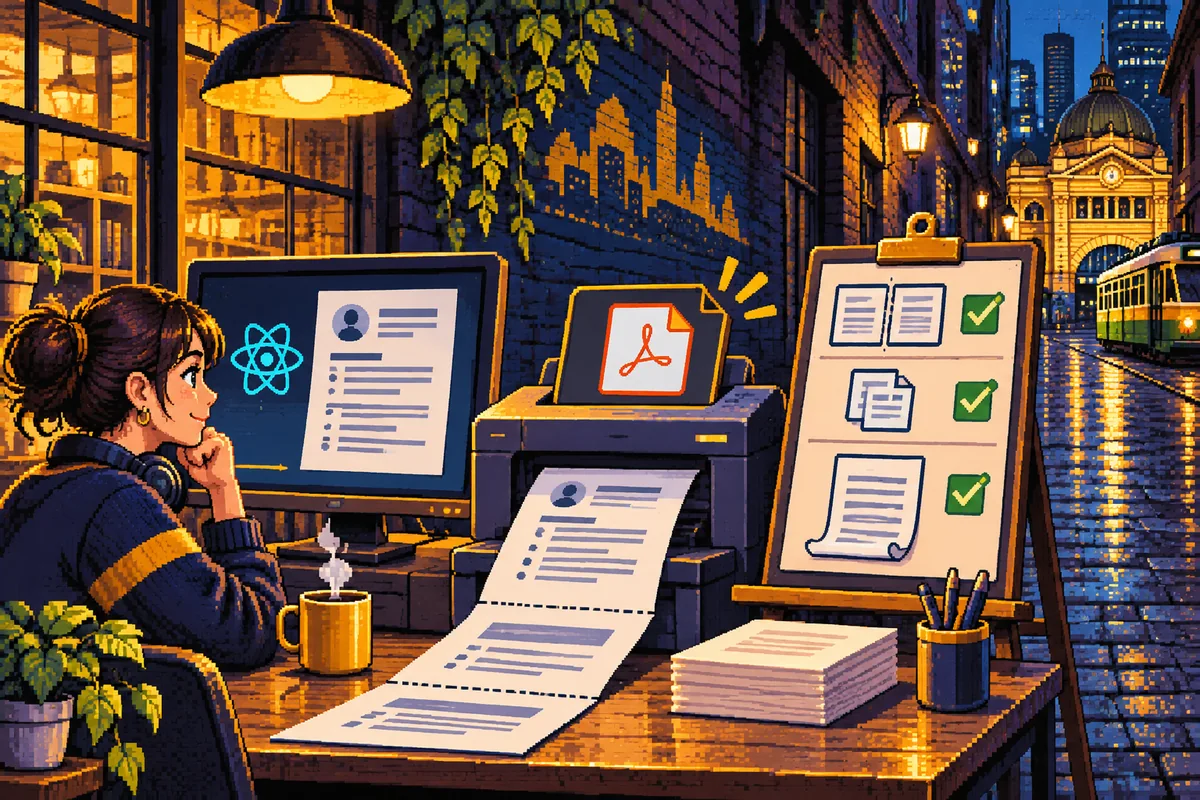
Treat AI resume edits as proposals tied to facts a user supplied.
Build the example
Start with a fictional profile that says “reduced weekly report preparation from 90 to 60 minutes.” Assign a source ID to that fact and ask for a suggested bullet that references it. Show a diff before saving, preserve the original, and flag unsupported names, employers, dates or measurements for review.
Give the editor one valid paraphrase and one unsupported achievement. Check that the user can accept only the first. Also test a suggested edit that combines two source facts into one misleading claim. The presence of two valid references does not guarantee the combined sentence preserves their relationship, so the reviewer still needs the originals.
Watch the failure boundary
A reviewer should see the source fact next to every suggested bullet. Require approval before moving text into the saved resume and make it easy to restore the original. A schema can enforce that citations are supplied, but a second check still needs to establish whether the cited fact supports the new wording.
Verify the behavior
Feed the editor a model response claiming the user managed a team of five. The fixture should flag it because no source fact supports it. Test a harmless rewrite with the same numbers and a response that changes 60 to 30. Keep approved edits traceable and keep actual resumes out of public examples.
Sources
Technical references checked .

Eeshan Singh
I’m Eeshan Singh Pokharia, an AI Full Stack Developer and CoFounder of UltraFit360. I work across AI features, full-stack product development, and web and mobile experiences—from Figma and frontend interactions to the systems behind them.
A reviewer should see the source fact next to every suggested bullet. Require approval before moving text into the saved resume and make it easy to restore the original. A schema can enforce that citations are supplied, but a second check still needs to establish whether the cited fact supports the new wording.
Meet the author