An extraction pipeline should be able to leave a field unresolved when the input gives no defensible answer.
Build the example
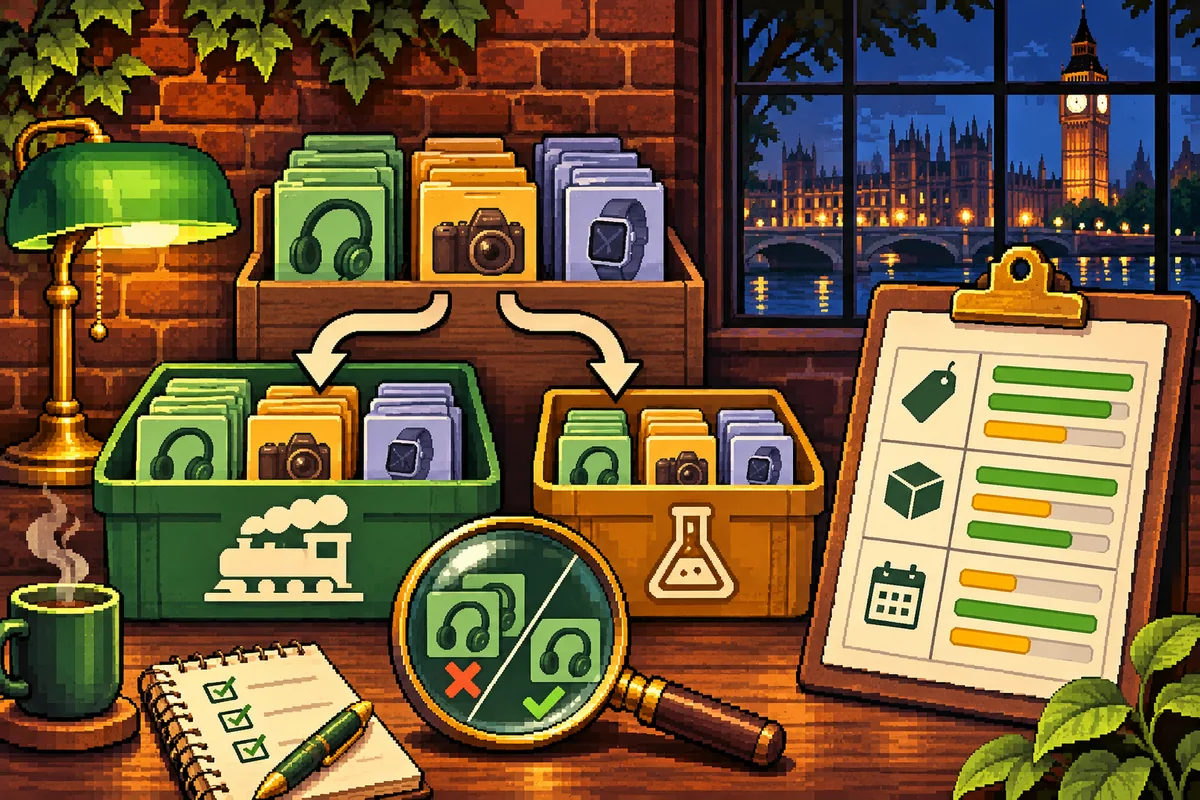
Prepare ten fictional product records with absent, ambiguous and well-supported dimensions. Compare three policies: guess every value, abstain whenever evidence is missing, and abstain whenever a validation rule fails. Measure accepted-field precision and coverage together, using the same definition of an accepted value.
Suppose one policy accepts six records and gets five right. Its coverage on ten records is 60%, and accepted precision is about 83%. A second policy that accepts three and gets all three right has 30% coverage. Use those counts when deciding whether the resulting review queue is practical.
Watch the failure boundary
Use distinct reasons for unknown, contradictory and invalid values. These categories need different follow-up actions. An absent value may need a supplier question. Conflicting evidence may need a reviewer. An invalid unit may need a parser fix. Grouping all three together makes it harder to improve the pipeline using real failure counts.
Verify the behavior
Tune any threshold on a validation set and freeze it before the held-out evaluation. A policy can improve precision by accepting only one record. Compare its coverage with the review workload your team can handle and display unknown explicitly rather than converting it to zero.
Sources
Technical references checked .

Eeshan Singh
I’m Eeshan Singh Pokharia, an AI Full Stack Developer and CoFounder of UltraFit360. I work across AI features, full-stack product development, and web and mobile experiences—from Figma and frontend interactions to the systems behind them.
Use distinct reasons for unknown, contradictory and invalid values. These categories need different follow-up actions. An absent value may need a supplier question. Conflicting evidence may need a reviewer. An invalid unit may need a parser fix. Grouping all three together makes it harder to improve the pipeline using real failure counts.
Meet the author