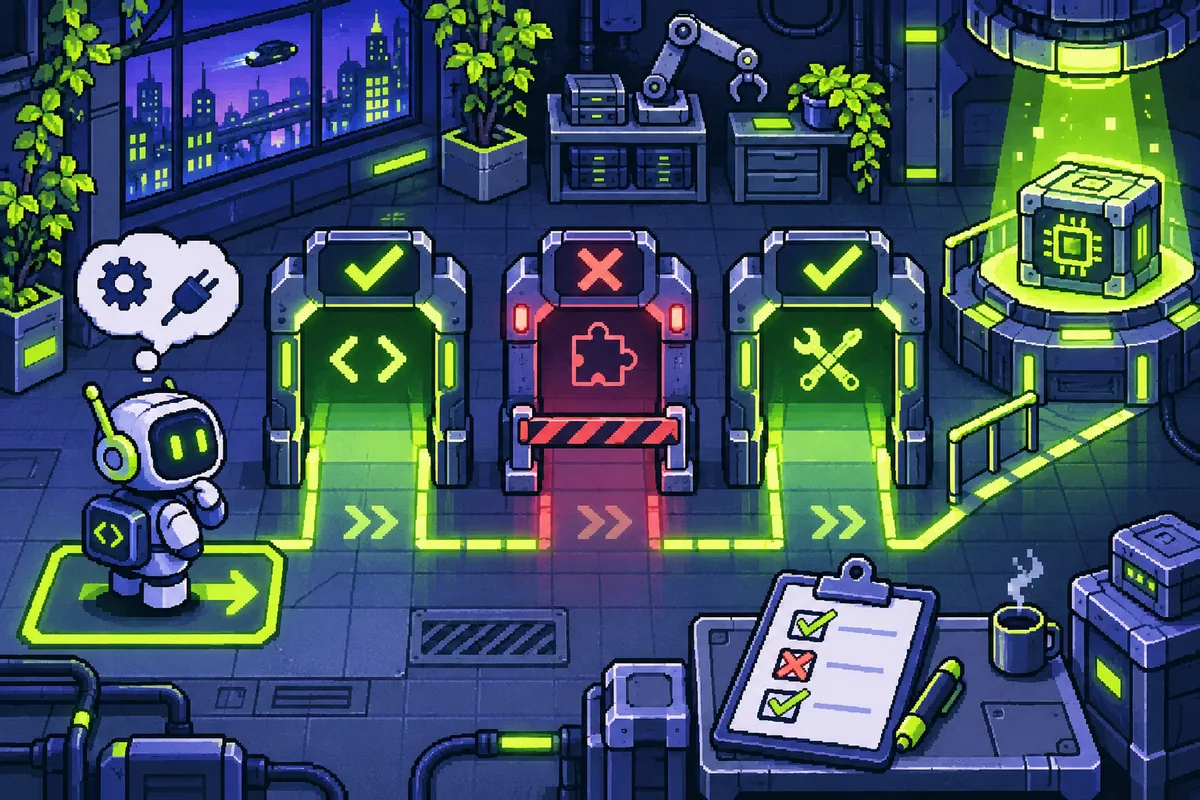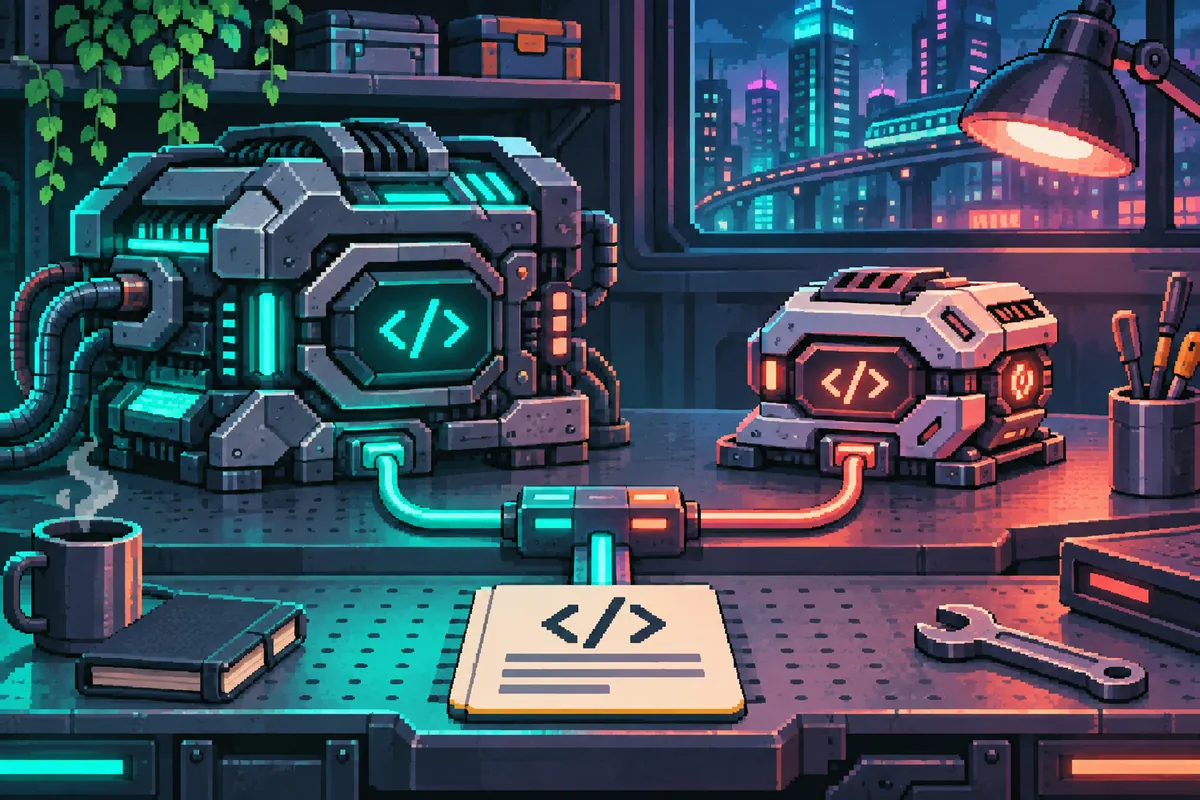
GitHub positions MAI Code 2 for more complex coding work and MAI Code 2 Flash for lightweight, rapid iteration. That is a useful starting hypothesis, not a measured winner for your repository. Choose a representative task, check current access and billing conditions, and compare correctness, scope control and total workflow cost.
Use the announcement as positioning, not proof
GitHub describes Code 2 as a general-purpose model for complex agentic software engineering and Flash as a lighter option for everyday work. Read those as intended use cases. A task that sounds small can still require difficult repository context, while a large diff can be mostly mechanical.
Do not convert marketing categories into a universal rule that one model always wins. Your tool setup, instructions and acceptance tests can change the outcome. A useful comparison records those conditions so the result can be interpreted.
Check access before designing the workflow
The November 17 announcement lists different plan coverage and usage-based billing, with eligibility details including annual-plan availability. Those conditions can change, so inspect the current model and pricing documentation. A visible picker entry is not a guarantee of unlimited free use.
For managed accounts, administrator model policies can also apply. Keep the comparison within approved tools and budget. This article does not activate a paid plan or claim an evaluation has no usage cost.
Match the experiment to the task
Intended use from the announcement should be tested against your own acceptance criteria.
Targeted work
- Small edit
A bounded change with a clear expected diff.
- Flash candidate
Evaluate speed, correctness and unnecessary changes.
Broader work
- Multi-file task
Requires repository context, implementation and verification.
- Code 2 candidate
Evaluate planning, consistency and complete task evidence.
Measure the finished task, including retries and tests, rather than only the first response.
Create two representative tasks
For a targeted fixture, use an invented small component with one known accessibility bug and a clear expected behaviour. For a broader fixture, use a disposable multi-file feature with a documented API contract and tests. Neither requires copying private product code into a public article.
Use the same starting commit, permissions, instructions and tool availability for each model. Keep hidden expected results where useful so the agent cannot pass merely by repeating a supplied answer. Review the actual diff and test output rather than relying on the final summary.
Scroll the table horizontally to see all columns.
| Criterion | Targeted-edit fixture | Multi-file fixture |
|---|---|---|
| Correctness | Fixes the specified behaviour | Preserves the complete contract |
| Scope | Avoids unrelated edits | Changes all necessary layers without unrelated churn |
| Verification | Runs the relevant meaningful check | Tests integration and failure paths |
| Evidence | Reports observed test results | Distinguishes completed and unverified work |
| Cost | Includes retries and tool work | Includes the entire completed workflow |
Measure total task time honestly
First-token delay and decoding speed are useful but incomplete. A faster answer that needs three repair cycles may take longer overall. Include repository inspection, tool calls, tests, retries and human review in the workflow boundary you report.
If you cannot measure billing directly, label cost unavailable rather than inferring a price from response length. Likewise, do not publish percentage improvements from one informal run. Repeat representative tasks and retain failures to understand variability.
Inspect unrequested changes
Look for dependency upgrades, formatting churn, deleted validation and modified tests that make a failure disappear without fixing behaviour. A passing suite is weaker evidence if the model rewrote the suite to mirror its implementation. Review the diff before celebrating a green result.
For security-sensitive work, keep server-side permissions and human review requirements. Model selection is not an authorisation system. A more capable model should not automatically receive broader production access simply because it handles a larger task.
Choose a policy you can revisit
You might start with a lighter model for well-bounded work and escalate when a defined difficulty appears. Or a repository may justify a more capable model from the beginning. Either policy should be based on observed task outcomes and current costs, not a fixed hierarchy inferred from model names.
Save the fixtures and rerun them after meaningful model or tool updates. The goal is a maintained decision rule: which option completes this class of work correctly and economically under our constraints? That is more useful than a ranking chart that cannot explain how its numbers were obtained.
Frequently asked questions
Is MAI Code 2 Flash available on the same plans as Code 2? The November 17 announcement names a broader set for Flash, including Free and Student, and lists additional eligibility conditions. Check current plan and billing documentation before choosing access.
Does this guide show a measured Code 2 versus Flash benchmark? No. It gives an evaluation method and distinguishes provider positioning from observed results. No invented accuracy, speed or price chart is presented.
What should I compare besides response speed? Compare task correctness, unrequested changes, test evidence, retries, review effort and total usage cost under the same permissions and instructions.
Sources
- GitHub, November 17: MAI Code 2 and Flash
- GitHub, November 17: Copilot Evals public preview
- Related practical guide
Technical references checked .

Eeshan Singh
I’m Eeshan Singh Pokharia, an AI Full Stack Developer and CoFounder of UltraFit360. I work across AI features, full-stack product development, and web and mobile experiences—from Figma and frontend interactions to the systems behind them.
This guide provides a comparison worksheet rather than fabricated scores. No private code, paid test run or model benchmark is claimed, and the artwork is not a performance ranking.
Meet the author