A file upload is not finished merely because the browser sent its bytes. DeepSeek's Files API parses a document before returning its file identifier, and its parsing purpose changes whether figures are included. Your interface should explain those states and avoid promising that a chart was understood when the selected parsing path only supplied text.
Tell the person where the file is going
Before upload, explain that the selected file will be sent to the provider for processing. Identify any file-type and size limits from the current documentation. Do not imply local-only analysis because the upload button lives in a browser on the person's laptop.
Use an invented document in development. A real contract, health report or private repository export is unnecessary for testing upload states. Avoid putting filenames, document text or file identifiers into general-purpose analytics unless you have a deliberate, justified data policy.
Choose parsing purpose based on the question
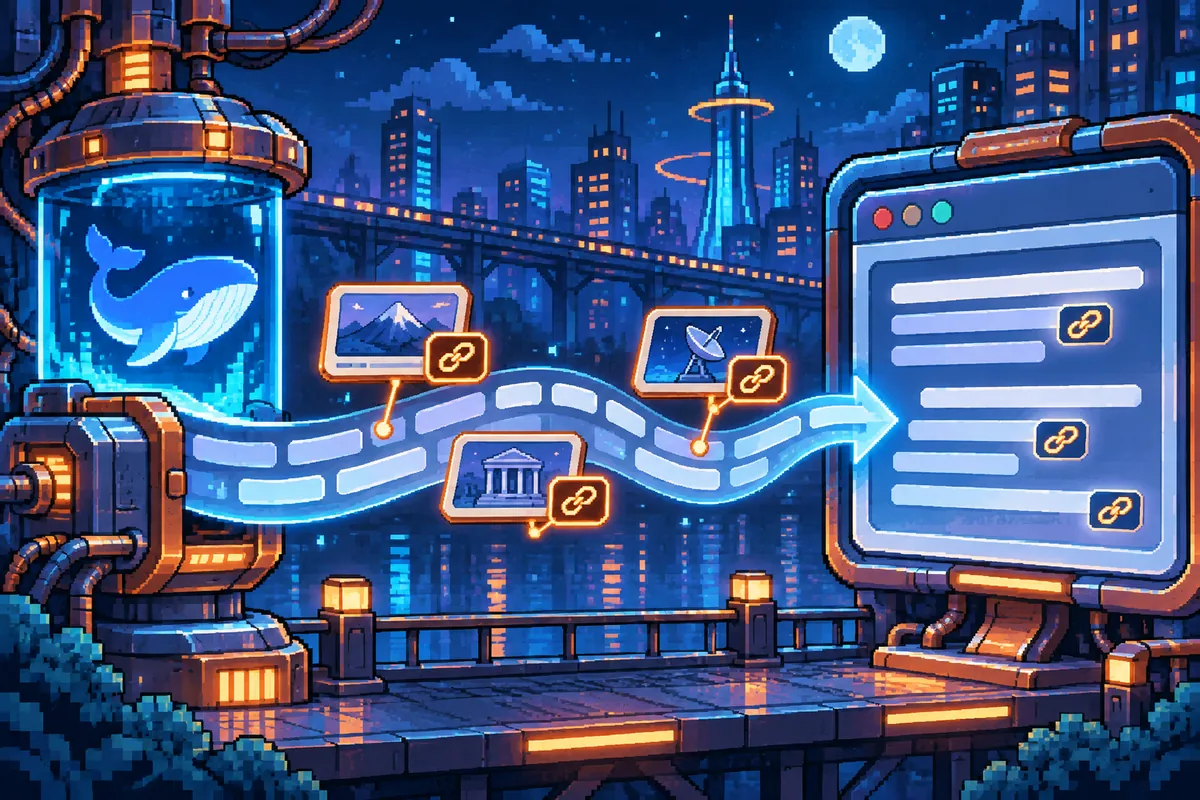
The documented text_recognition purpose supplies text and omits document figures. The rich_layout_recognition purpose includes detected figures in context with the text. Detection is not perfect, so even the richer path is not a guarantee that every chart or diagram is represented.
Imagine an invented report with a paragraph saying revenue increased and a chart showing a seasonal dip. A text-only path cannot support a detailed answer about the chart's shape if that information is absent from the extracted text. The UI should not claim visual understanding solely because a PDF upload succeeded.
Uploaded bytes are not yet model context
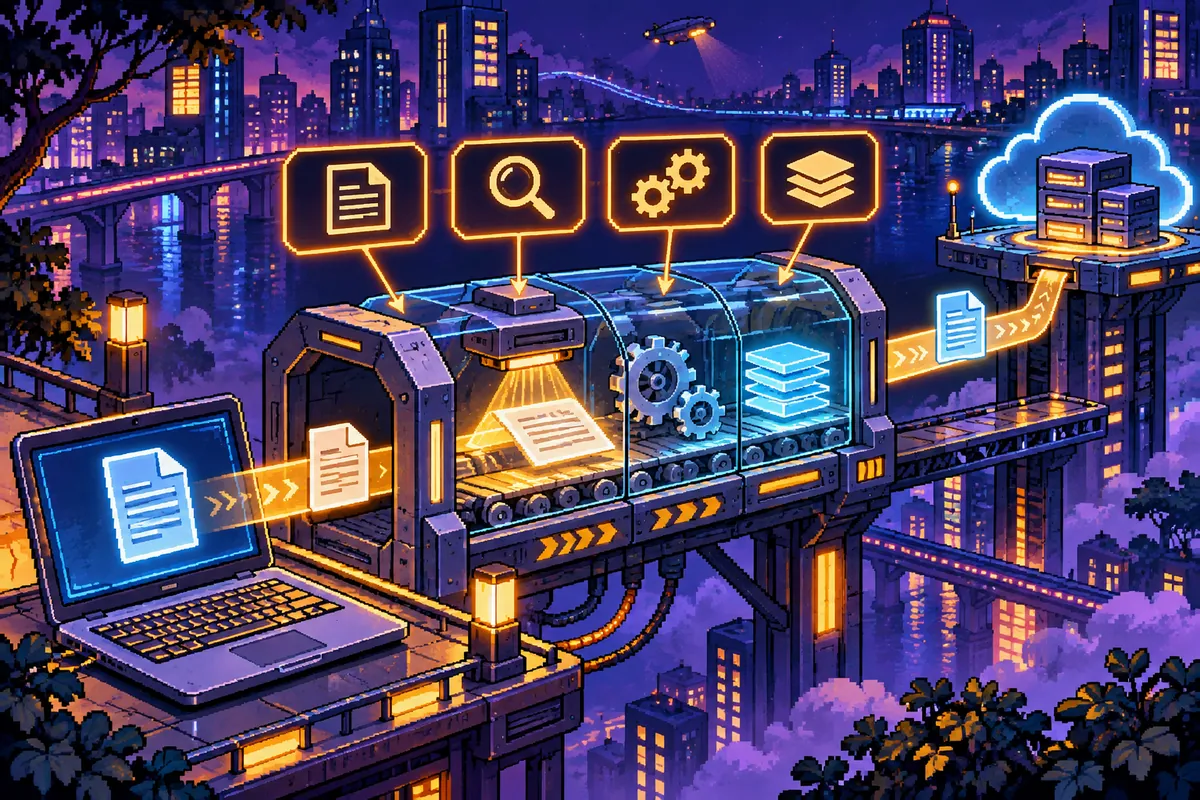
A conceptual lifecycle. Provider-side retention and deletion require their own documented controls.
Preparation
- Consent and purpose
Explain the destination and choose the needed parsing mode.
- Upload and parse
Keep the operation pending until the documented result arrives.
Use and lifecycle
- File reference
Use the returned identifier in the supported request format.
- Retention review
Track stored files, application copies and deletion responsibilities separately.
A disconnected browser does not prove that provider-side parsing or storage stopped.
Keep upload and parsing states separate
The provider's documented flow returns the file identifier after parsing succeeds. A browser upload progress bar can reach completion while the server is still parsing. Show a distinct processing state rather than declaring success at the end of byte transfer.
Client and intermediary timeouts must account for both phases. If the request disconnects, do not assume the server abandoned the work. The documentation describes parsing continuing and a successful file being stored and billed. A blind retry can therefore create duplicate work or files.
Scroll the table horizontally to see all columns.
| State | Useful message | What not to imply |
|---|---|---|
| Selected | File is ready to send | Provider already received it |
| Uploading | Bytes are being transferred | Parsing has finished |
| Parsing | Provider is processing the document | Every figure will be detected |
| Ready | Supported file reference is available | Every later answer will be correct |
| Disconnected or uncertain | Result needs reconciliation | Server definitely cancelled processing |
| Removed locally | Local reference is gone | All external copies were deleted |
Build reconciliation before automatic retry
Track an application operation identity and its known state without exposing credentials. When a timeout occurs, consult the provider's documented file-listing or retrieval controls where appropriate before resending. The exact reconciliation method must follow the current API and your account's permissions.
Do not invent an idempotency guarantee that the endpoint does not document. If duplicate files can occur, make cleanup and user feedback explicit. A polished spinner is less valuable than knowing whether a request is complete, failed or uncertain.
Validate the answer against the supplied context
After parsing, use the returned identifier through the supported request format. Ask a question whose answer can be checked against the invented document. Test a text-only question and a figure-dependent question separately so you can observe the effect of parsing purpose.
If the model cannot see a necessary figure, the application should state the limitation or ask for a suitable input rather than fabricate a chart reading. Citation or page references also need validation; a plausible page number is not evidence that the answer is grounded there.
Treat deletion as a lifecycle task
Keep a map of the original upload, parsed representation, model request, application copy and logs. Check the provider's current retention and deletion controls for each relevant object. Removing a conversation row in your UI does not automatically establish that every stored file or backup is gone.
Publish only the privacy promise your implementation can support. The useful product is one that makes upload purpose, processing state, uncertainty and removal understandable. That is more trustworthy than describing a multi-stage external pipeline as a simple instant local file read.
Frequently asked questions
Does text_recognition let the model see every chart? No. The documentation describes text-only parsing for that purpose. Use the documented richer-layout option when figures are needed, and still account for imperfect figure detection.
Does the file ID arrive before parsing finishes? The documented flow returns a file identifier after parsing succeeds. Your client and proxy timeouts need to account for upload plus parsing time.
If my browser disconnects, is the upload automatically cancelled? Do not assume that. DeepSeek documents that parsing can continue after a client disconnect and a successful file can still be stored and billed. Reconcile state before blindly retrying.
Sources
Technical references checked .

Eeshan Singh
I’m Eeshan Singh Pokharia, an AI Full Stack Developer and CoFounder of UltraFit360. I work across AI features, full-stack product development, and web and mobile experiences—from Figma and frontend interactions to the systems behind them.
This is a public-API product-design walkthrough. It does not contain private documents or claim that our app uses this upload pipeline. The example report and chart are invented teaching material.
Meet the author